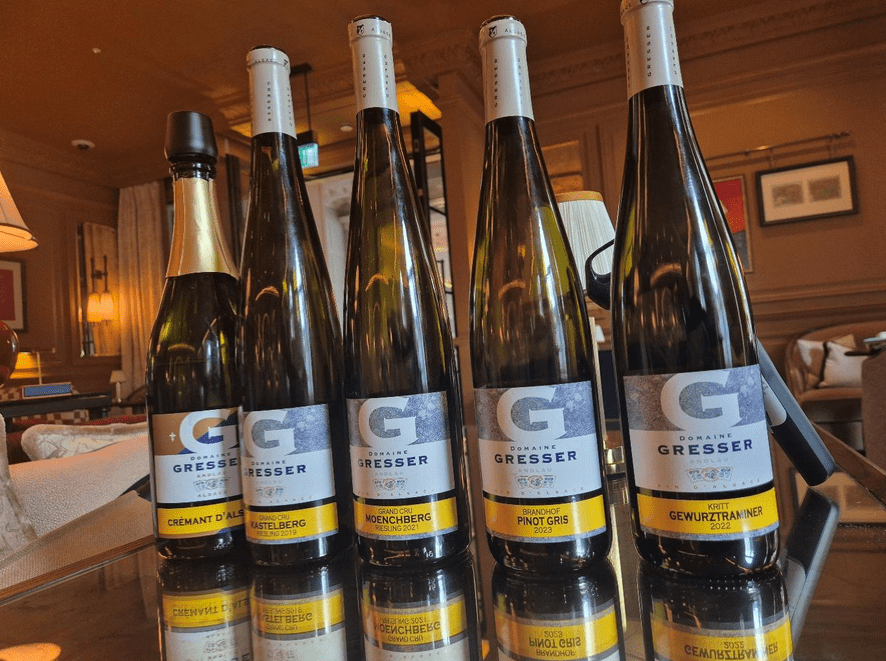
A biodynamic grower from Andlau, making expressive, dry and food-friendly wines from some of Alsace’s most distinctive Grand Cru sites.
Alsace: a fascinating wine region with French and German influences. Over centuries, the region has moved between the two countries, and its wine culture reflects that history: vineyard names, grape varieties and classifications all appear together in a way that feels uniquely Alsatian. Unlike Burgundy’s three-tier system of Grand Cru, Premier Cru and village wines, Alsace adopted a two-tier classification, Grand Cru and Village, and a vineyard may have multiple grape varieties. This means that a bottle might carry both a Grand Cru vineyard name and a grape variety, such as Moenchberg Grand Cru Riesling or Moenchberg Grand Cru Pinot Gris.
Why Rémy Gresser Stands Out
Rémy Gresser is based in Andlau, a village with some of the most complex geology in Alsace. The estate works just over 11 hectares of vineyards, certified organic and farmed according to biodynamic principles. Rémy was also one of the first Alsatian winegrowers to move decisively in this direction, becoming certified organic and biodynamic in 2003. His wines combine aromatic richness with freshness, precision and restraint. What surprised many tasters was how balanced the Riesling, Pinot Gris and Gewurztraminer were: expressive and generous, but not overly sweet. This is exactly what makes them so useful for restaurants, independent retailers and pairing menus.
Three Grand Crus, Three Soil Types
Alsace has 52 recognised Grand Cru vineyards with 3 different types of soil: slate, sandstone, and limestone. Rémy Gresser works with all three of them in Andlau: Kastelberg, Wiebelsberg and Moenchberg. Each brings a different expression of place, shaped by its soil and exposure.
- Kastelberg Grand Cru: Alsace’s only Grand Cru on slate, giving wines with striking minerality, depth and a distinctive savoury complexity.
- Wiebelsberg Grand Cru: from sandstone soils, often associated with lively, floral and elegant Riesling.
- Moenchberg Grand Cru: with limestone and sandstone influence, producing structured wines with richness, balance and gastronomic appeal.
Wines to Watch
Crémant d’Alsace offers a bright, fresh introduction to the domaine: elegant bubbles with immediate appeal for by-the-glass listings, aperitif moments and deli shelves.
Riesling Les Graves shows the dry, mineral side of Alsace Riesling: clean, precise and versatile with food. It is a natural fit for seafood, white meats, salads and lighter seasonal dishes.
Pinot Gris brings texture and generosity without losing freshness. It is ideal for richer dishes, roast poultry, mushrooms, charcuterie and creamy sauces.
Gewurztraminer, whose name means “spicy Traminer”, is aromatic and expressive, but in Rémy’s hands remains balanced rather than heavy. It is especially compelling with aromatic dishes, soft cheeses and tasting menus where a lifted, perfumed wine is needed.
Trade Response
One hybrid retailer/restaurant recently added Cremant, Riesling Les Graves and Moenchberg to their list and a Michelin star restaurant is pairing the Gewurtz with their menu. Rémy himself makes a strong impression with clients: knowledgeable, engaging and able to explain Alsace’s classification, grape varieties and terroirs in a way that feels clear and memorable. His experience as elected president of the CIVA, the Comité Interprofessionnel des Vins d’Alsace, for five years gives him additional authority as an ambassador for the region.
Why List Rémy Gresser Now?
Rémy Gresser’s wines offer a compelling combination of authenticity, sustainability and drinkability. They tell the story of Alsace’s layered history, its distinctive Grand Cru appellation and the remarkable diversity of Andlau’s soils — while remaining approachable, balanced and highly food-friendly. For buyers looking for wines with a clear point of difference and strong hand-sell potential, this is a domaine to champion.